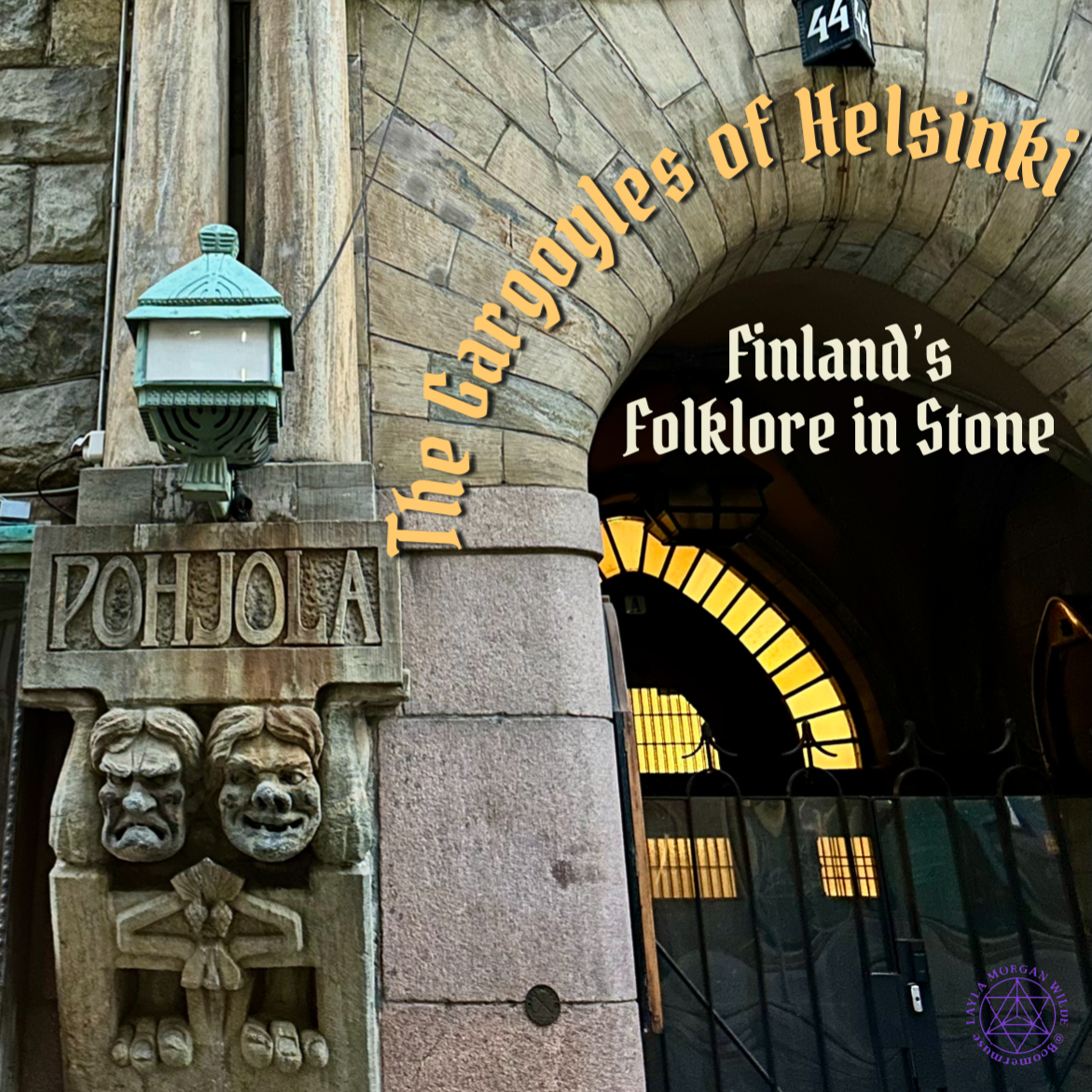
Why do gargoyles look so frightening.
Not for decoration alone. In medieval and folk tradition, the grotesque face at the threshold was protective. The horror was the point. It scared away whatever shouldn’t enter before it ever reached the door. A monstrous face standing guard so something gentler could stay safe inside.
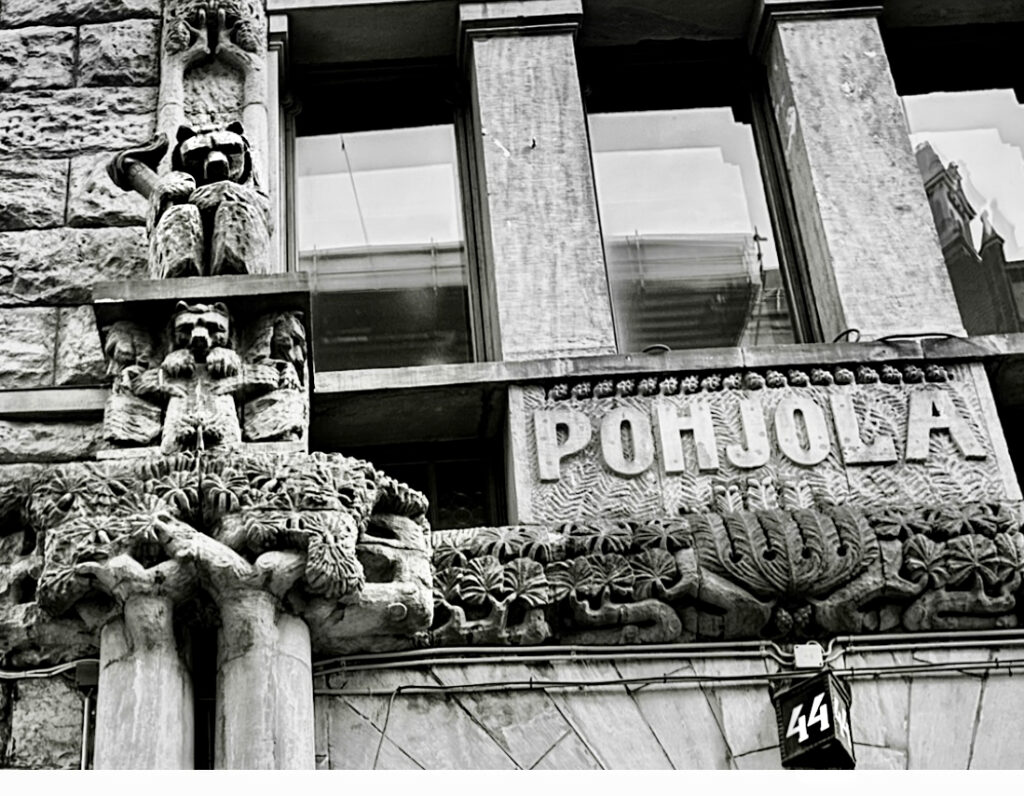
I found a building in Helsinki that takes this idea to a whole new level. Every time I passed it on the street car, it took my breath away. It stirred something primeval in me, and I knew I had to take a closer look.
The Pohjola Insurance Building was completed in 1901, designed by Herman Gesellius, Armas Lindgren, and Eliel Saarinen, three of the architects who defined Finnish National Romanticism. The facade is red granite, cut from native Finnish stone, and across its surface crawl carved gargoyles, bears, witches and grotesque guardian figures drawn directly from the Kalevala, Finland’s national epic.
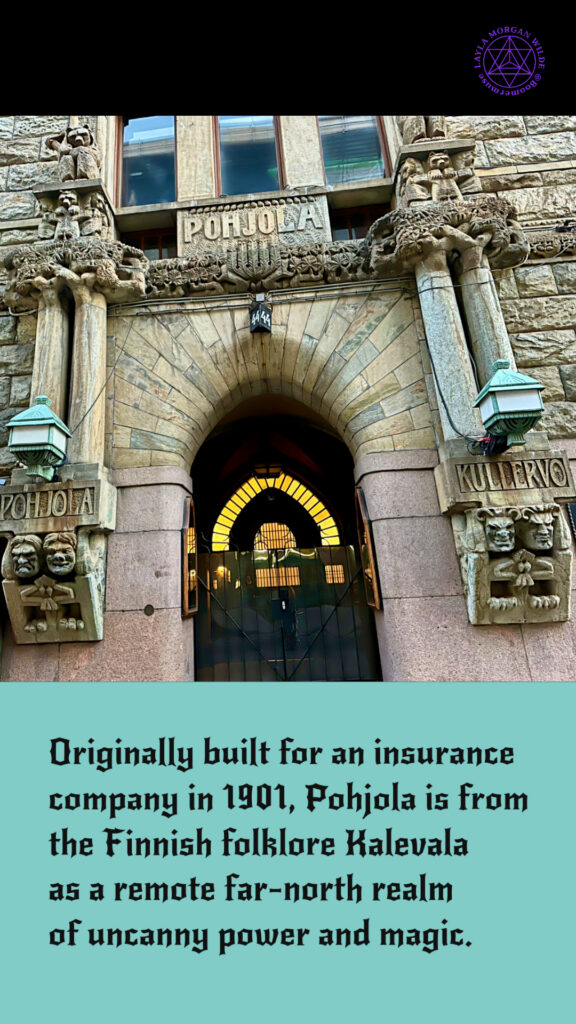
This was an insurance company. The building that sold protection wore protection on its face, carved in stone, drawn from a thousand years of folklore. Form and function and myth, all fused into one facade.
I love the bears especially. The bear is Finland’s national animal and one of my own power animals, and finding it carved into a building built fifteen years before Finnish independence feels like more than coincidence.
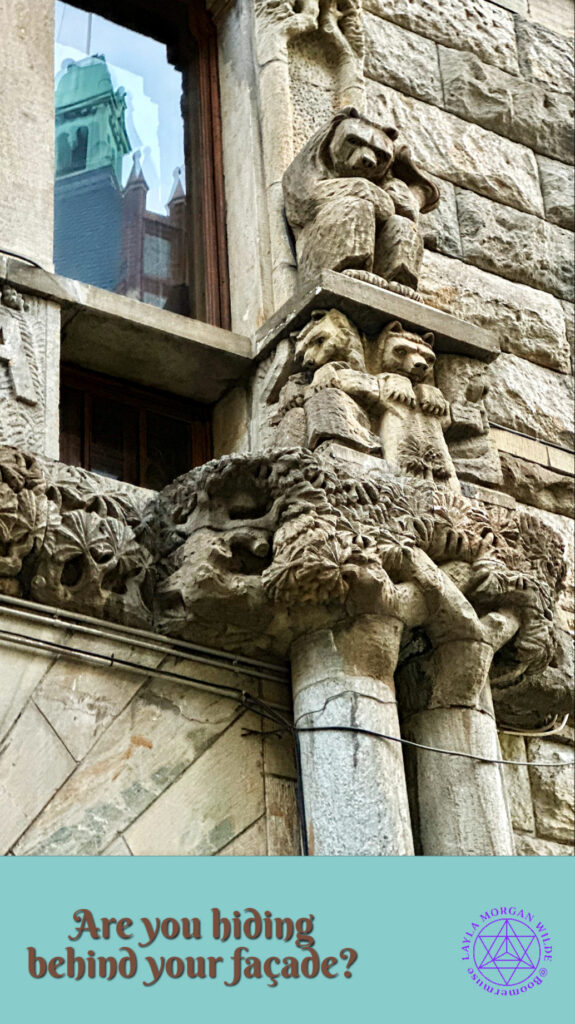
Looking closer at the photographs, I found something I’d missed the first time. Carved between two of the gargoyles is a name. Kullervo.
He’s one of the most tragic figures in the entire Kalevala, a man raised in slavery after his family was destroyed, fated to suffer and to cause suffering, who eventually takes his own life with his father’s sword.
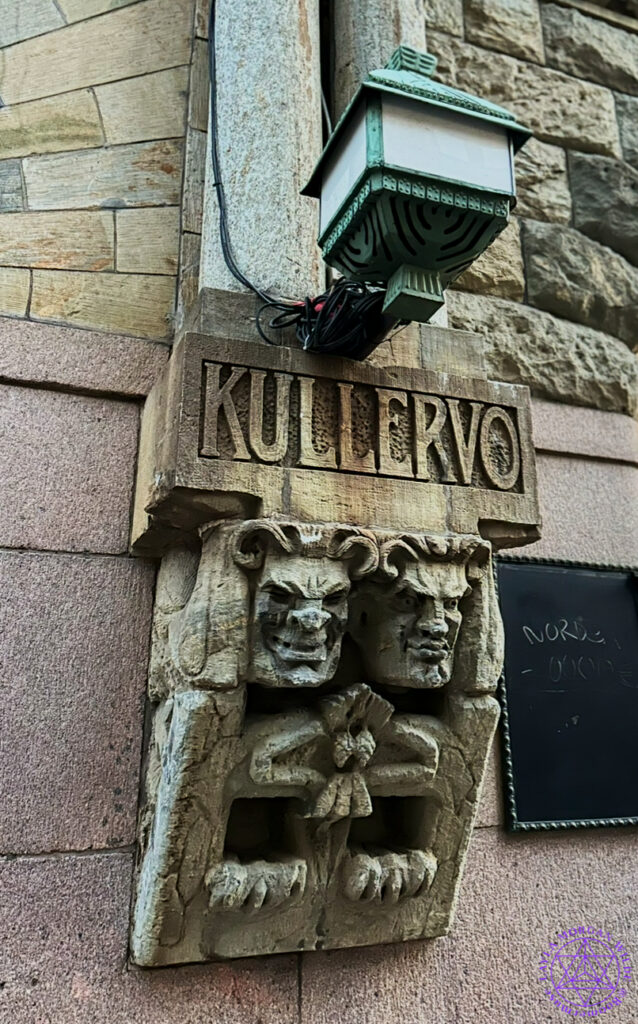
Tolkien himself drew on Kullervo’s story when shaping some of his own doomed heroes centuries later.
It’s a strange name to carve onto a building meant to symbolize protection and safety. Kullervo isn’t a guardian. He’s the one fate failed to protect. Maybe that’s the point. A building that sells protection while quietly admitting, in stone, that protection has limits.
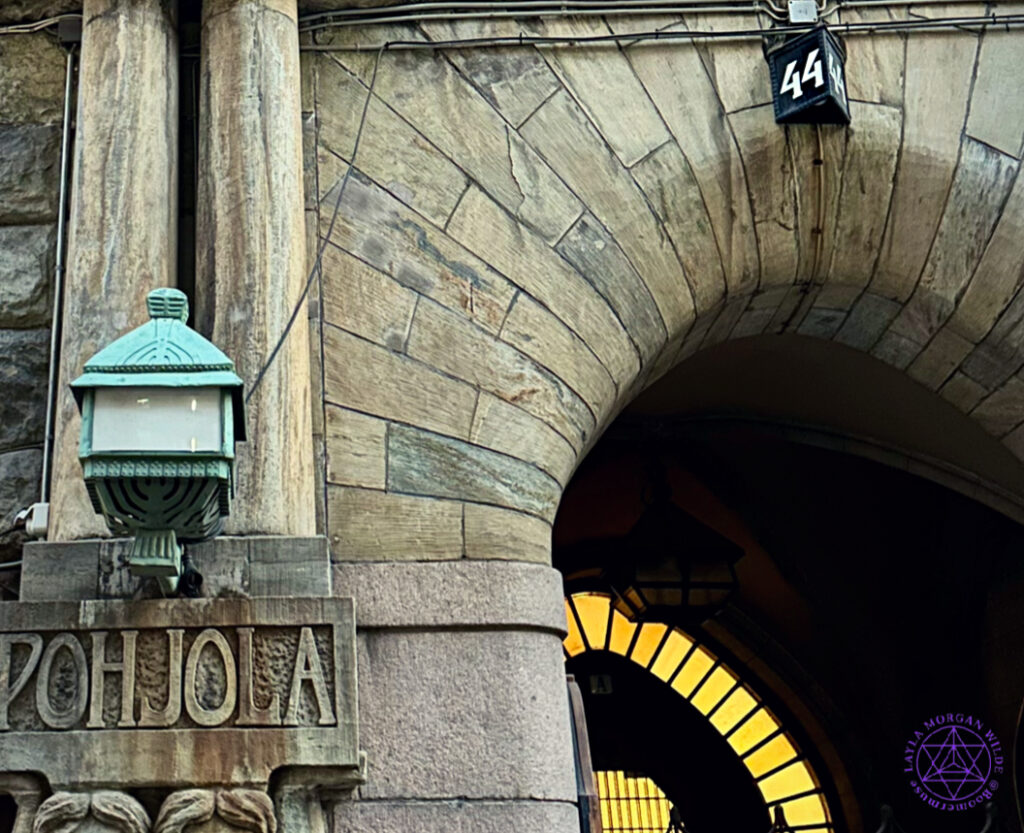
Even the little illuminated address lamp above the door carries its own quiet superstition. The number is 44. In Chinese numerology, four echoes the word for death, and 44 doubles that weight, which is why many buildings across parts of Asia skip a fourth floor entirely.
I have no idea whether the architects intended any of this, the bears, Kullervo, the number on the lamp. Probably not. But a building covered in folklore about protection and tragedy, wearing an address number that some traditions consider cursed, feels like exactly the kind of place where meaning accumulates whether anyone planned it or not.
Here is what’s underneath all of it. Finland spent centuries under Swedish rule, then Russian rule, before finally gaining independence in 1917. Through all of it, the old animistic, shamanic culture of the Kalevala never fully disappeared. It just learned to wear a different face.
Midsummer, the most pagan of celebrations, became Juhannus, officially St. John’s Day, while the entire country still lights enormous bonfires and behaves like it’s never heard of Christianity. May Day did the same thing. The old gods got new names and kept doing the old work.
And while witch hunts burned across England and continental Europe, Finland’s persecution of its shamans took a quieter, different shape. Drums were destroyed. Practices were suppressed. But there was no widespread burning. The old ways went underground instead of into the fire, hidden in folklore, in festival dates, in the carvings on the front of an insurance building that everyone walked past without quite seeing what they were looking at.
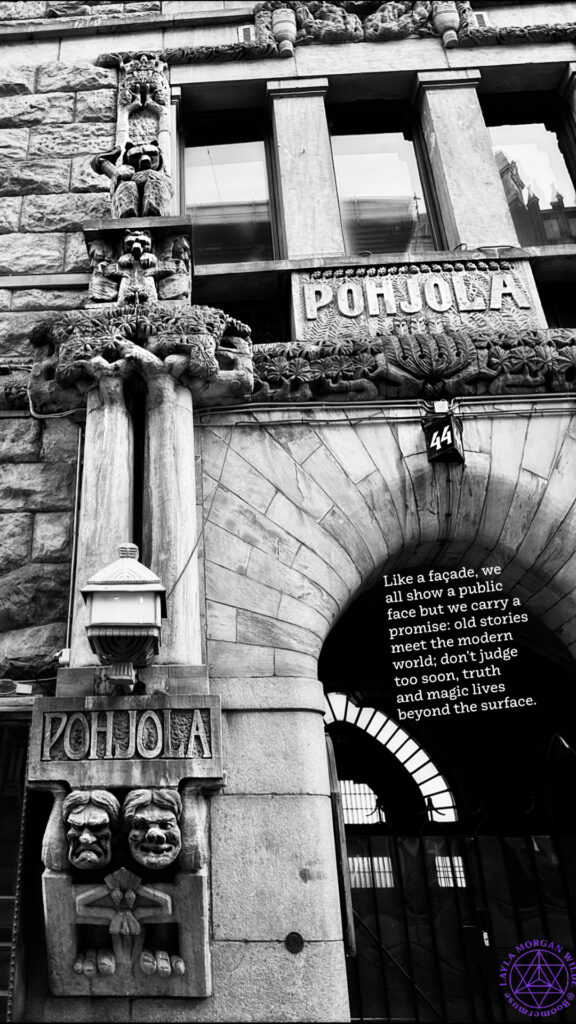
A facade is a kind of mask. It’s the face you choose to show the street while something entirely different happens inside. Sometimes that face is fierce on purpose, a gargoyle keeping watch, a grotesque doing its quiet protective work. Sometimes it admits tragedy outright, carving a doomed hero’s name where you’d least expect to find him. Sometimes a whole culture wears one face publicly while keeping something older and wilder alive underneath.
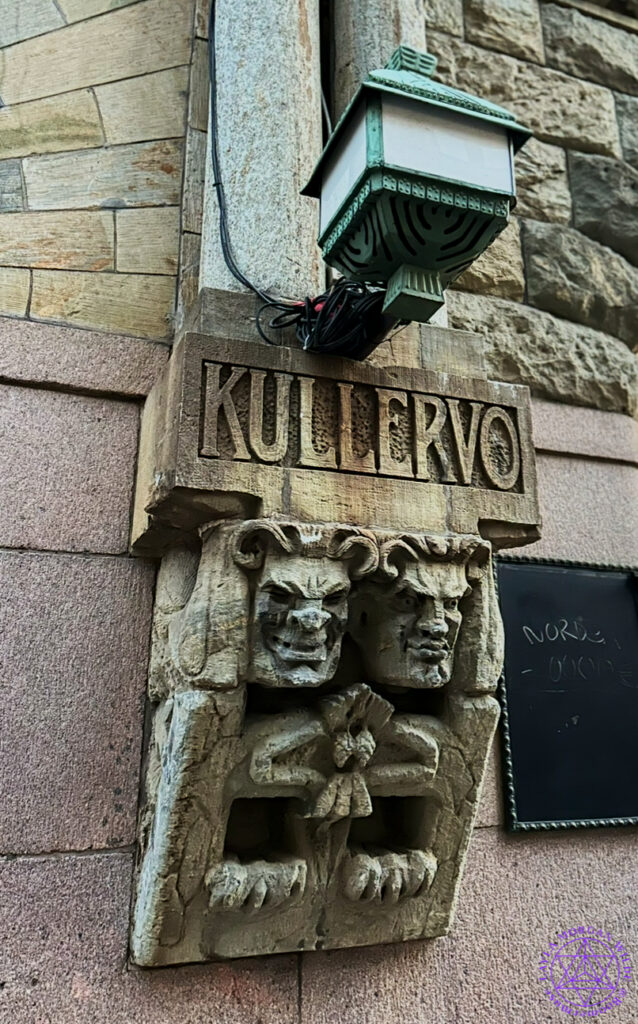
Beside the building, someone had started writing something on a small chalkboard outside a nearby shop. I could only make out a fragment.
Something Nordic, unfinished, left mid sentence. I liked that I couldn’t solve it. Some thresholds stay open.
I think about all of this every time I photograph a building’s facade. What is this structure protecting. What does it actually believe, underneath the face it’s chosen to show.
The Pohjola building has been answering that question in stone for over a century, hiding nothing and everything at once.
