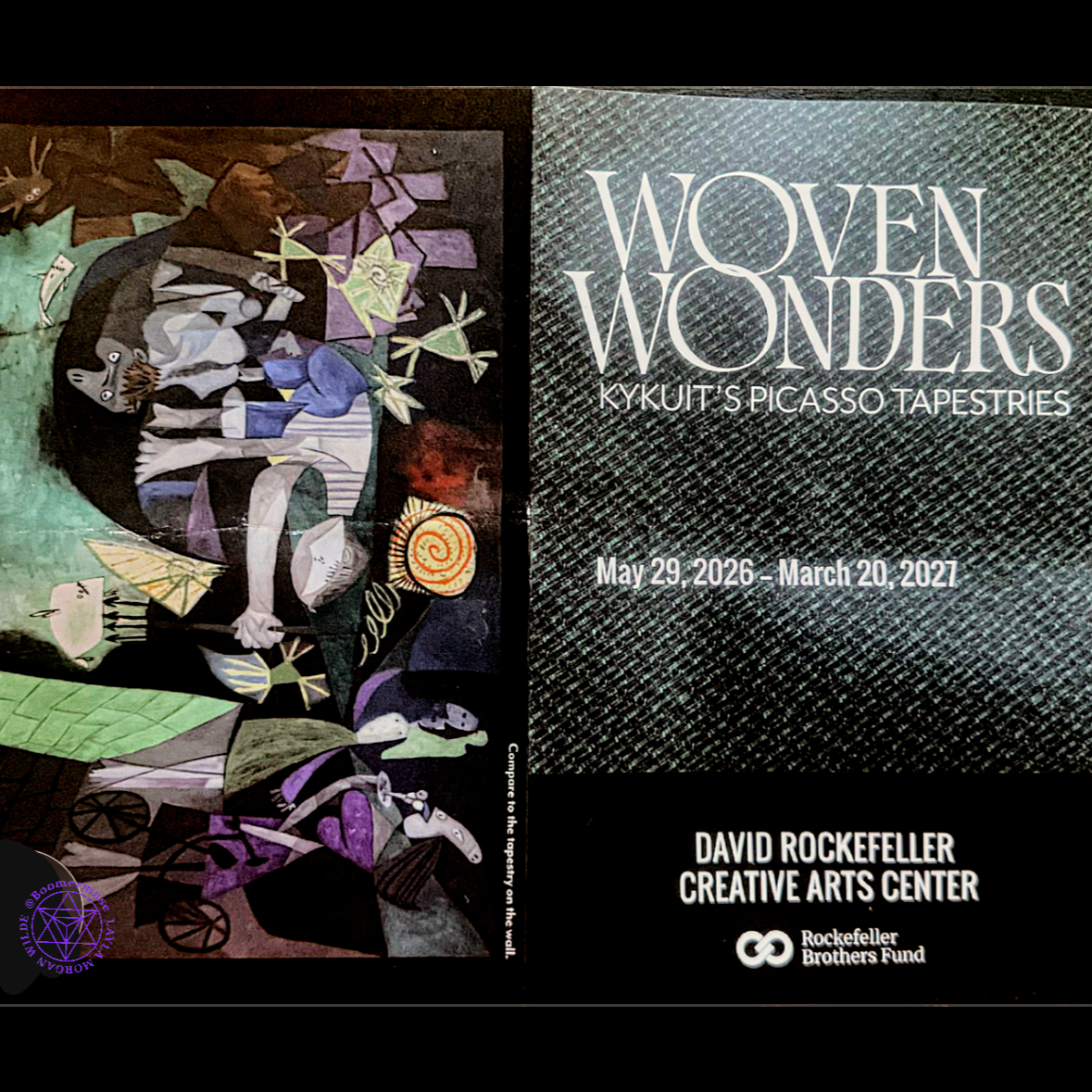
Woven Wonders at the David Rockefeller Creative Arts Center
There is a quiet, unmistakable energy that comes with true, generational old money. It isn’t loud, flashy, or performative like some public spaces of Manhattan.
Instead, it is an atmosphere steeped in absolute security, immaculate curation, and an expansive connection to the earth.
Tucked away in my Westchester neck of the woods, a stone’s throw from where the Rockefeller family famously donated over 600 acres to the State Park Preserve, and down the road from the legendary, Michelin-starred Blue Hill at Stone Barn sits a hidden gem in Pocantico that many locals don’t even know exists: The David Rockefeller Creative Arts Center (DR Center).
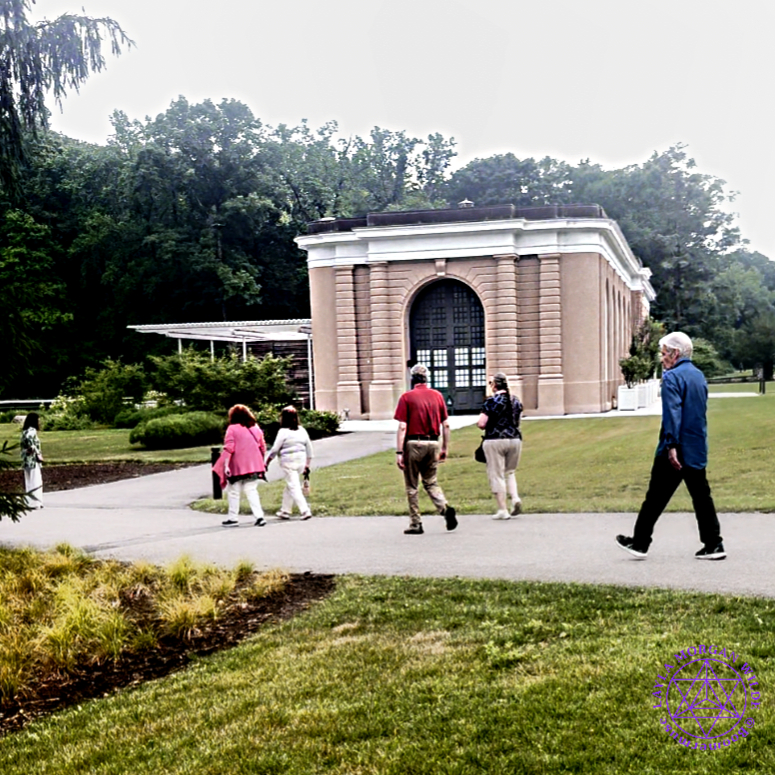
The Architecture of Discretion and Design
Originally built as a family orangerie (a winter-protective room or buildin,often a large glass greenhouse used to keep orange and other non-hardy fruit trees safe).
This special little place has been reimagined as an eco-friendly, solar-powered sanctuary for artists, featuring a gorgeous gallery and an intimate theater space.
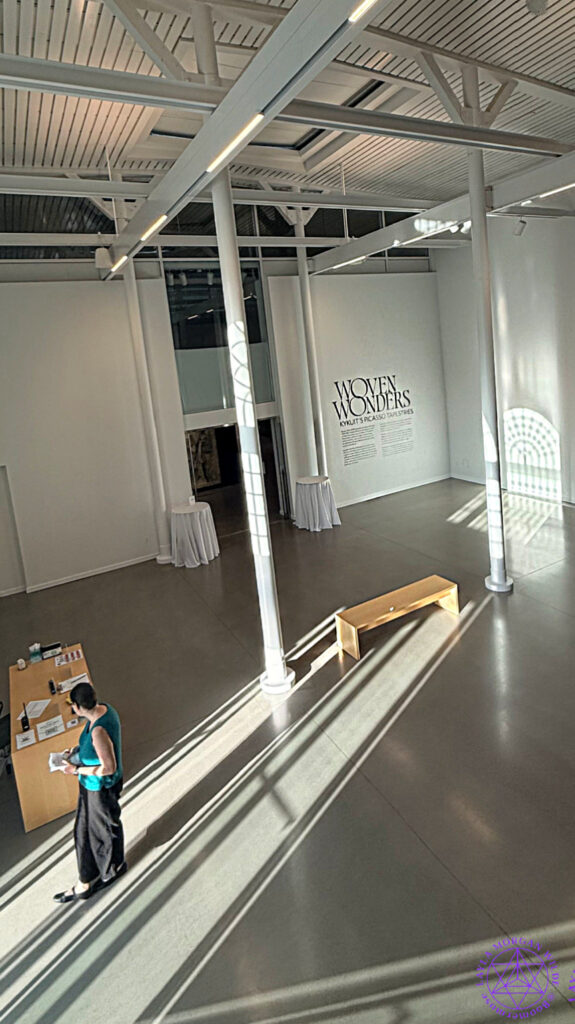
The building is designed with a brilliant indoor-outdoor studio flow that opens up seamlessly to the grounds, a new sculpture garden, and a level of security that makes its elite pedigree immediately clear

You don’t just park your car and stroll into the building. The secure journey begins with small electric trolleys transporting you from the parking lot, greeted by pristine staff at every single juncture.
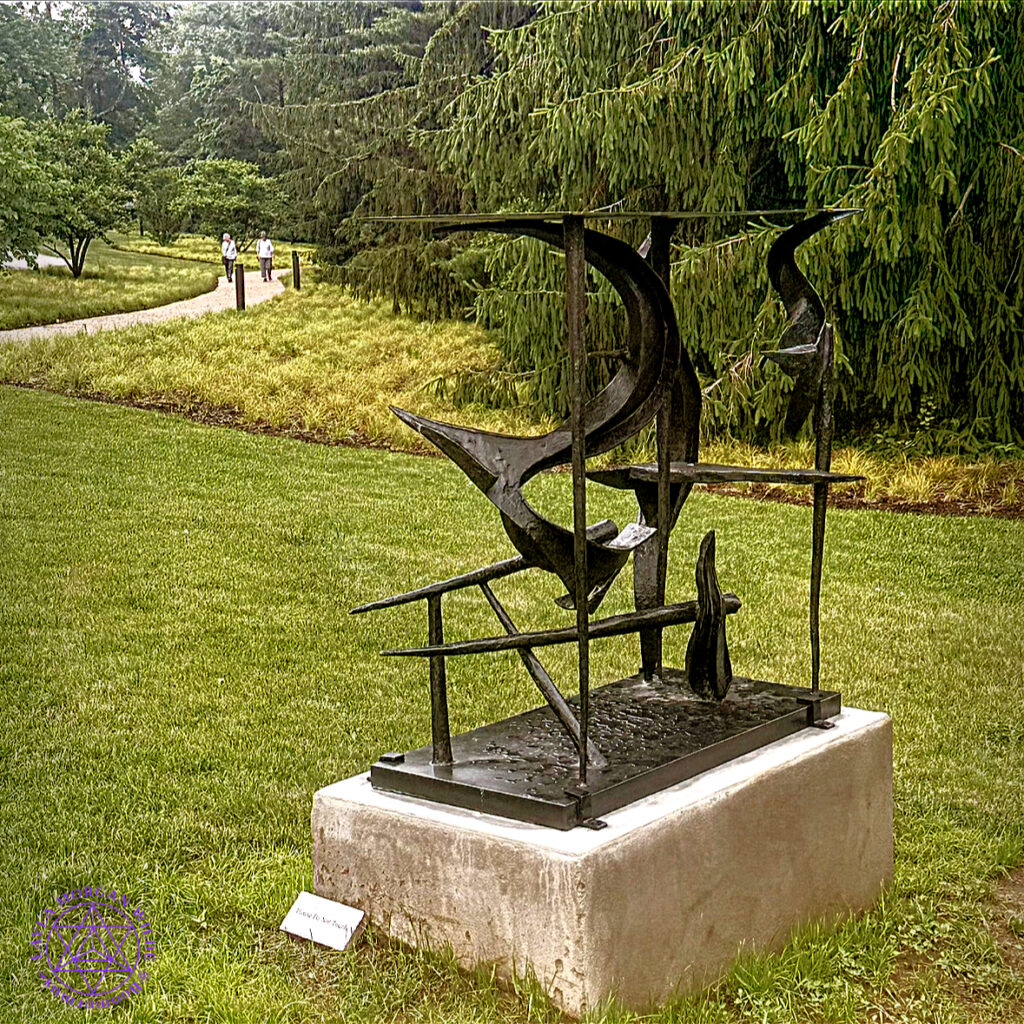
I confess, I might love the magnificent old trees as much as the art.
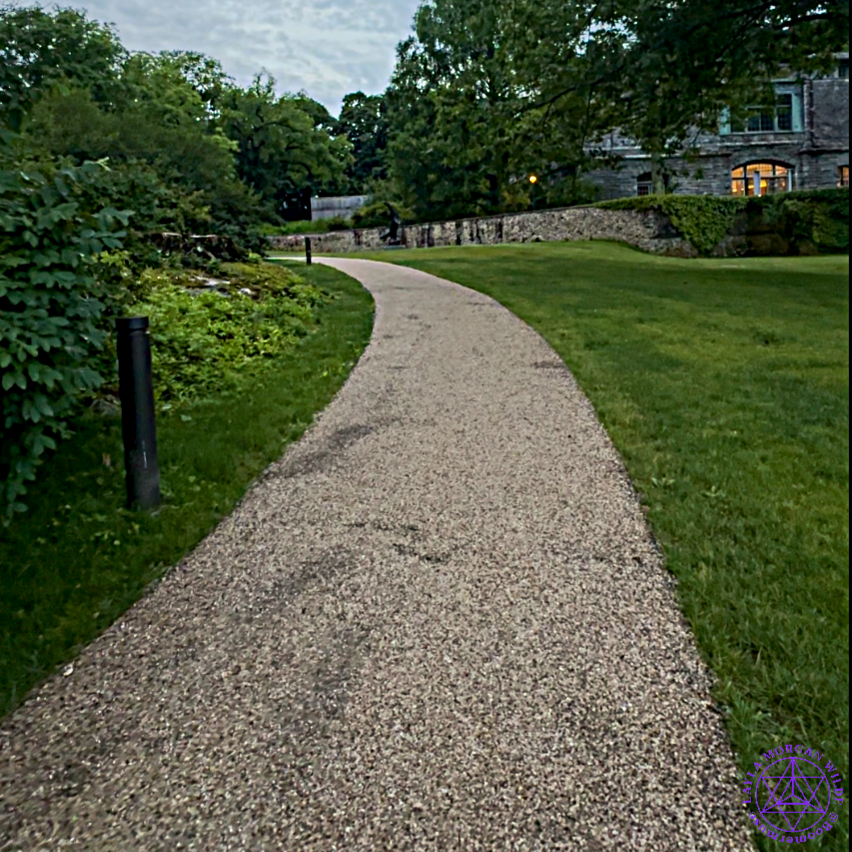
The exclusivity of the estate became vividly apparent to me at dusk. Stepping out into the heavy, humid evening air for a breath of fresh air and a glance at the new sculptures, a security detail immediately materialized to see if I was lost ;-).
Because a private Rockefeller family home sits directly at the end of the sculpture garden, the boundaries of this private empire are fiercely, elegantly guarded.
Woven Wonders
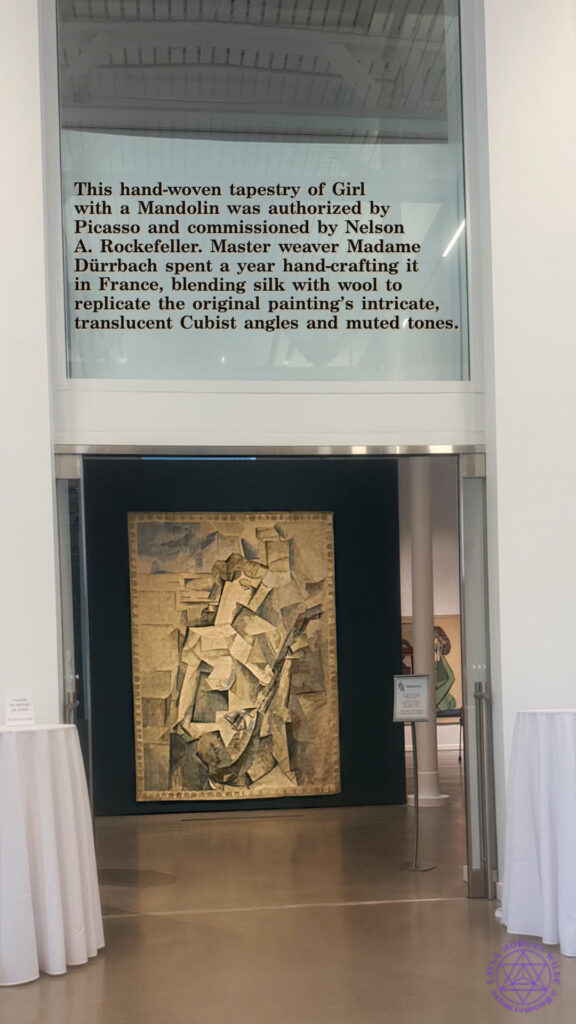
As a former Art History major who has visited both the magnificent Musée Picasso in Paris and the breathtaking collection in the South of France, I am deeply familiar with his canvas trajectory. Yet, seeing his genius translated into monumental textile forms was a completely refreshing revelation.
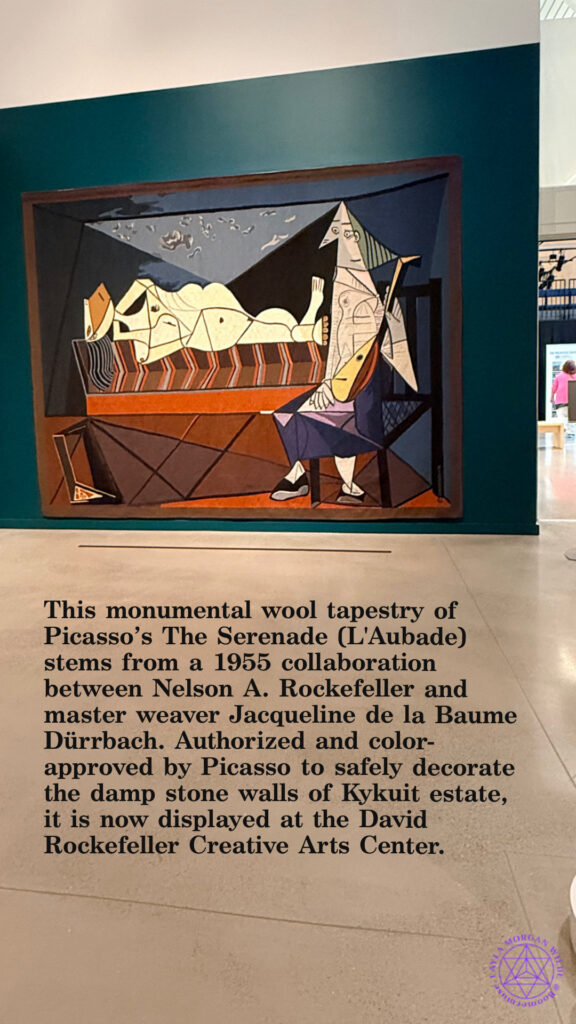
The exhibition, “Woven Wonders: Kykuit’s Picasso Tapestries,” features monumental wool and silk renderings woven by the brilliant Jacqueline de la Baume Dürrbach with Picasso’s direct authorization.
Nelson Rockefeller himself was famously enamored by this medium not just for its rich texture, but for its elite portability. Unlike a rigid, stretched canvas, these massive masterpieces were beautifully practical; they could simply be unhooked, folded up for ultimate portability.
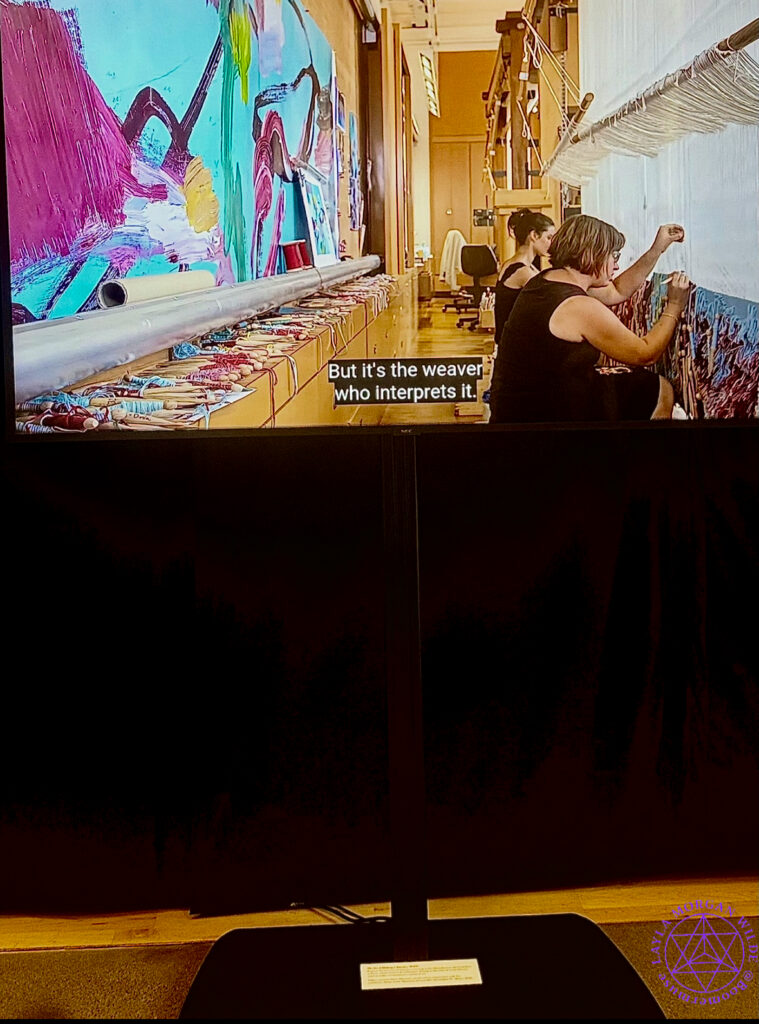
Outside the main gallery, a lovely educational film details the fascinating, natural dyeing and weaving processes executed in France.
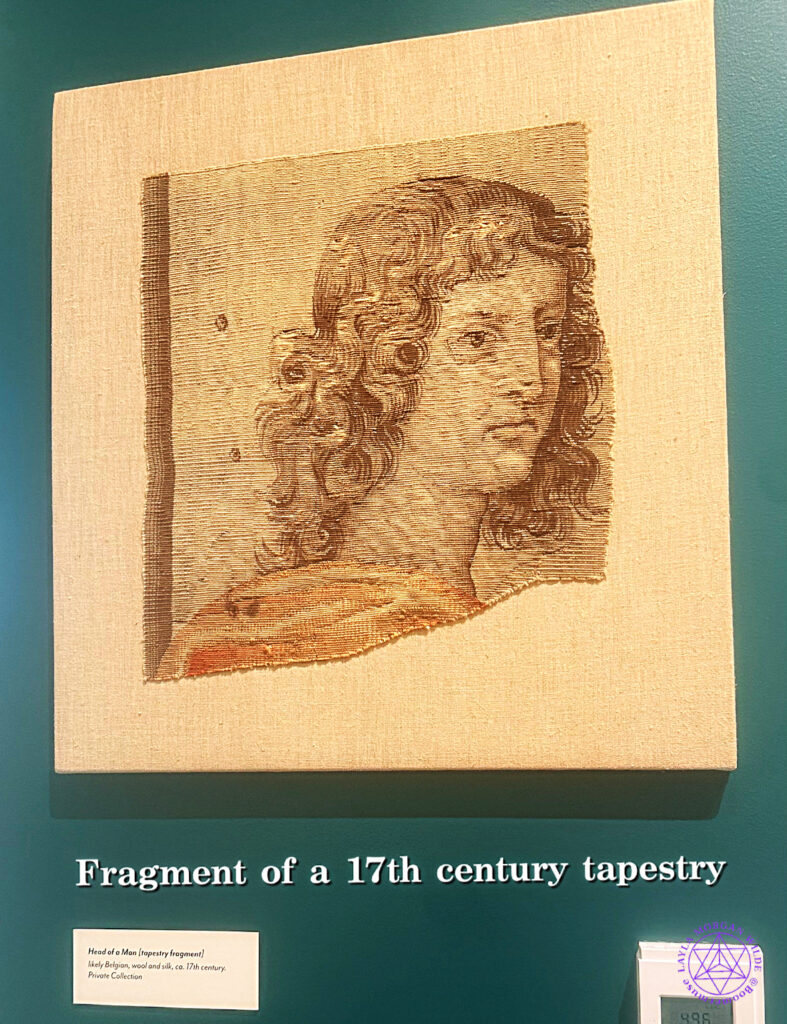
Step inside, and the sheer scale and immaculacy of the curation takes your breath away. They are way bigger than I expected, and the attention to detail is stunning.
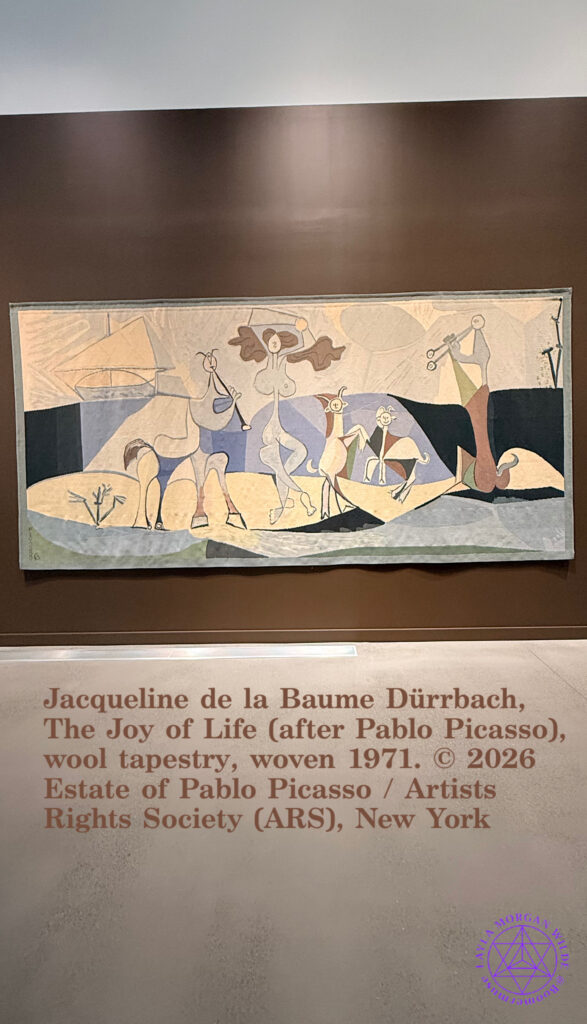
Watching how Dürrbach’s weaving completely shifts the spatial dynamics of Picasso’s original brushwork is a true art-lover’s joy. On a stretched canvas, Picasso used varying paint thickness to create tension.
In these tapestries, that tension is brilliantly re-engineered through flat, interlocking fields of naturally dyed wool and silk.
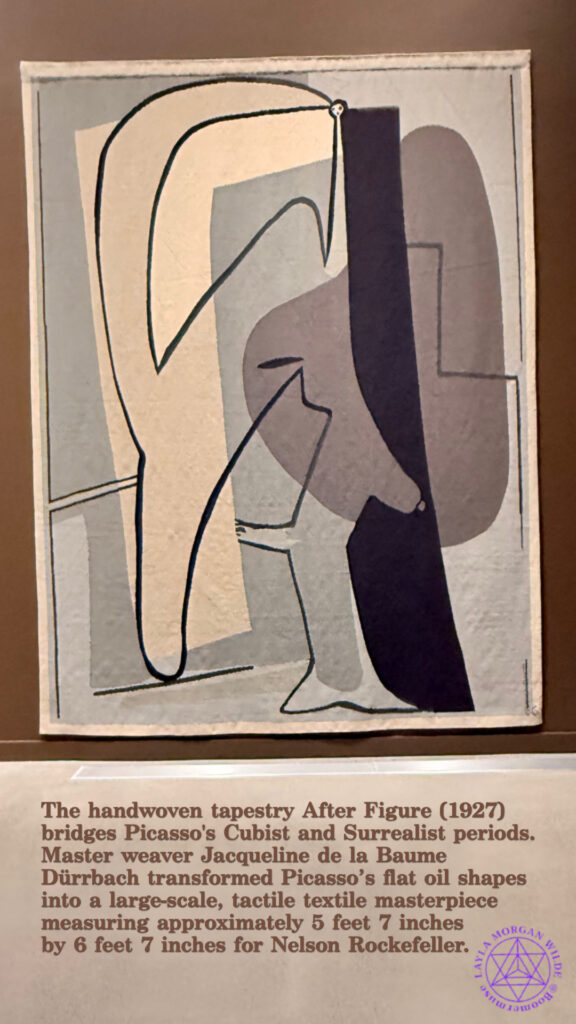
These particular pieces in the gallery showcase this incredible structural mastery:
Three Musicians (Nous Autres Musiciens)
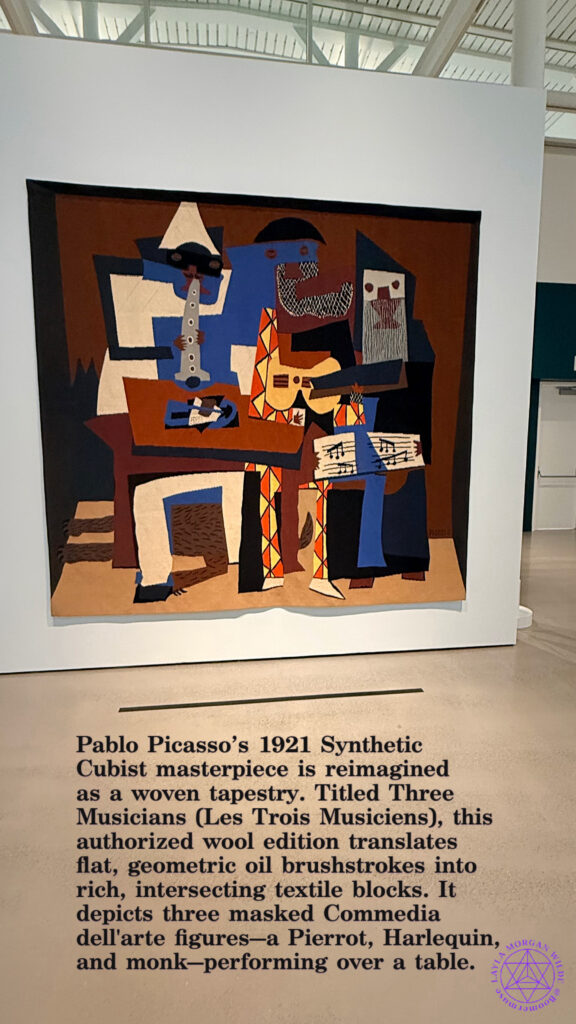
The woven translation of this 1921 Cubist masterpiece is nothing short of breathtaking. On canvas, the overlapping, paper-like shapes of the Harlequin, the Pierrot, and the monk can sometimes feel frantic. But the flat, dense weave of the tapestry tames that chaos.
It locks the bold blues, rich yellows, and deep blacks into a tight, harmonious architectural grid. The texture of the wool gives the flat geometric planes a sudden, heavy physical presence.
Picasso’s obsession with the melancholic performer is a staple of his trajectory, but seeing The Harlequin rendered in monumental textile form changes the emotional gravity of the piece.
The intricate weave captures the tight, diamond-patterned costume with a crisp, geometric precision that feels completely deliberate. The softness of the natural fibers creates a stunning contrast against the sharp, fractured lines of the figure, infusing the character with an unexpected warmth.
Girl Before a Mirror (Jeune Fille devant un Miroir)
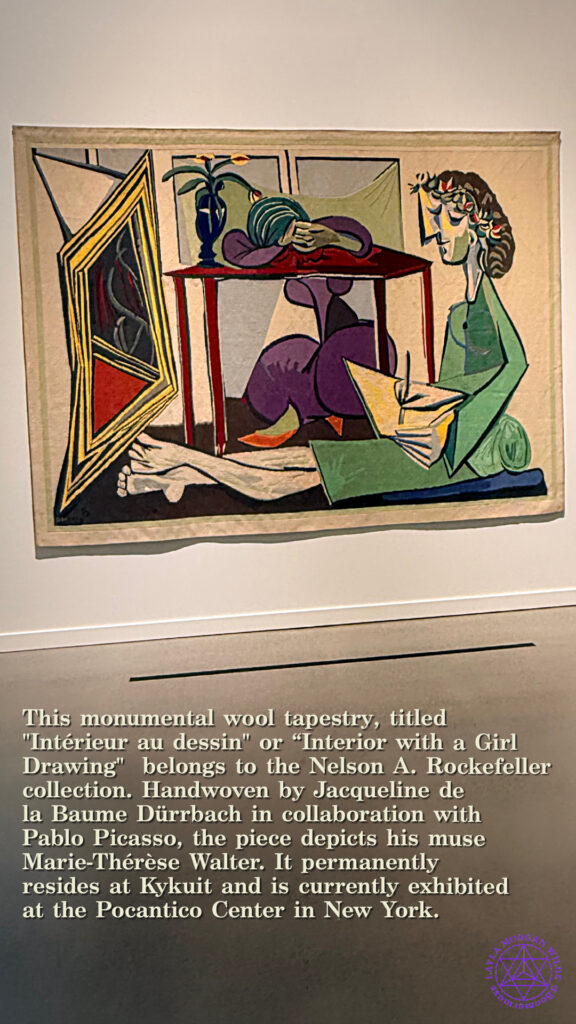
This piece is a technical triumph for the weavers. The original 1932 painting is a kaleidoscope of smooth, curved linework and intense psychological duality.
Translating those fluid, organic curves into a structured warp and weft is incredibly difficult. Yet, the tapestry perfectly preserves the sweeping contours of the woman and her reflection. The subtle luster of the silk threads catches the light beautifully, making the mirror image look completely luminous.
Finding My Horizon in Teal
While every tapestry is expertly hung, the piece that completely captured my soul was Night Fishing at Antibes.
Standing before it instantly transported me back to the South of France, remembering the entire Antibes harbor lined with those enormous, luxury yachts.
Picasso originally created and lived in 1939 inside the old Grimaldi Castle before it underwent its massive 2007 museum renovation. which I have not seen. When I visited which feels like 100 years ago, it possessed a raw sense of domesticity like a home where art was lived in, rather than a sterile museum space.
The tapestry rendering captures a deep, fluid, hypnotic teal blue in the ocean that completely re-centered my energy.
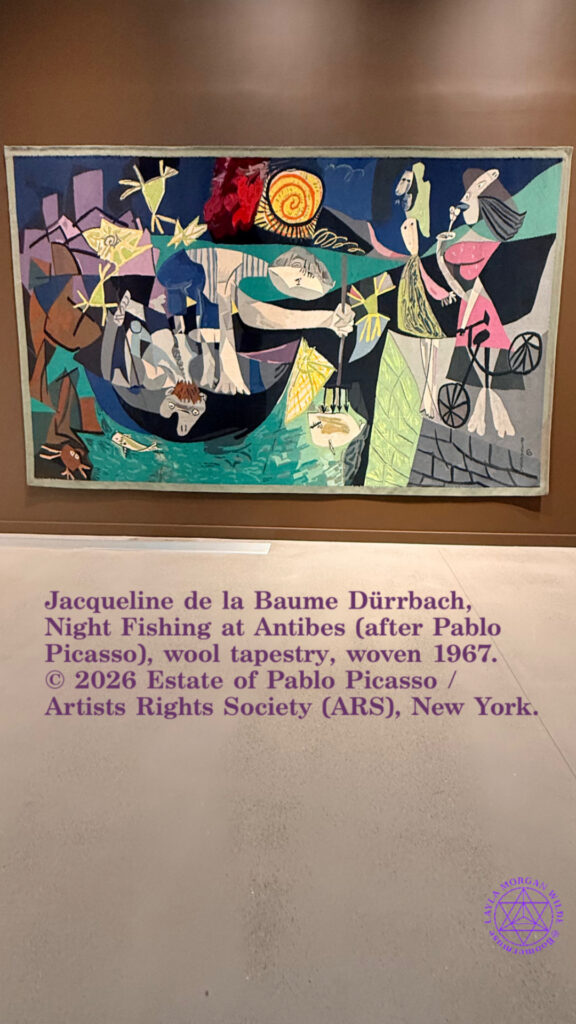
In fact, it is the exact, sophisticated shade of teal I am currently manifesting for my own bedroom walls. It is a color that carries both the depth of the Mediterranean and the quiet power of an artistic refuge and sweet dreams.
Art in whatever can speak to the soul when it does as glorious.
The DR Center is more than a gallery; it is a masterclass in how historic structures can be infused with fresh, vibrant, and eco-friendly energy. It proves that when the bones of a building are solid, a master’s touch can completely rewrite its internal life.
As someone who is naturally fussy about spatial flow, the attention to functional detail here is immaculate.
Yes, I am fascinated by public toilettes.
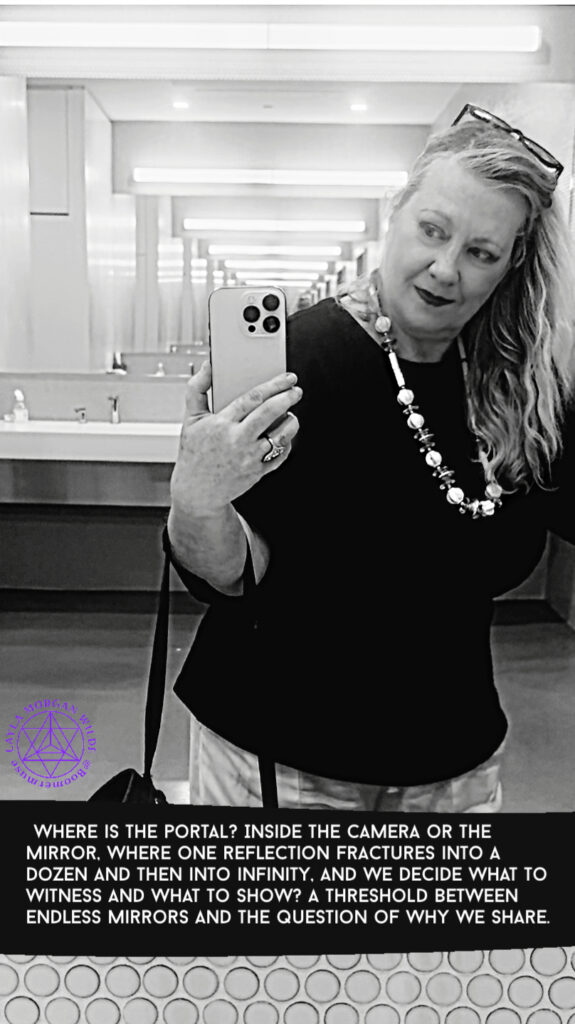
Even the gender-neutral washroom is a masterclass in modern design. It opens directly without a door, revealing wide, elegant banks of mirrors and sinks.
The toilet stalls on either side offer total, uncompromising sovereignty with beautifully crafted walls that extend all the way down to the floor for absolute privacy
(From a complete aside, my lifelong habit of photographing unique ladies’ rooms during my travels has inspired an upcoming, dedicated blog post all about toilet design, so stay tuned!)
The exhibit is on until March 2027.
