The Day Summer Ends: Lughnasadh, Lammas, and the Nordic Thread I Didn’t Know I Was Following. ( all photos by Layla Morgan Wilde)
I have always known it as August 1st.
Not the pagan calendar version, I didn’t have that language as a child. I mean I knew it in my body. Every year, without fail, I would wake up after my birthday and feel it: summer was over.
Not almost over. Over. I could smell it before I could explain it, a faint mineral coolness under the green. I’d look at the trees and see it too, if I looked closely enough: the first leaves starting to curl at their edges, drying a shade darker than the ones around them, letting go early, as if they’d gotten the memo before anyone else.
I didn’t know I was sensing a pagan cross-quarter day. I just knew something in the year had quietly turned.
The Holiday With Many Names
August 1st has been called a lot of things by a lot of people, which tells you something, this is a threshold so real that cultures kept independently noticing it.
The Celts called it Lughnasadh (or Lúnasa, or Lughnasa), named for the god Lugh, who instituted funeral games in honor of his foster-mother Tailtiu — a goddess of the earth who, in one telling, died of exhaustion after clearing the land for agriculture.
It’s the first of the three harvest festivals, the moment the golden fields start giving back what was sown.
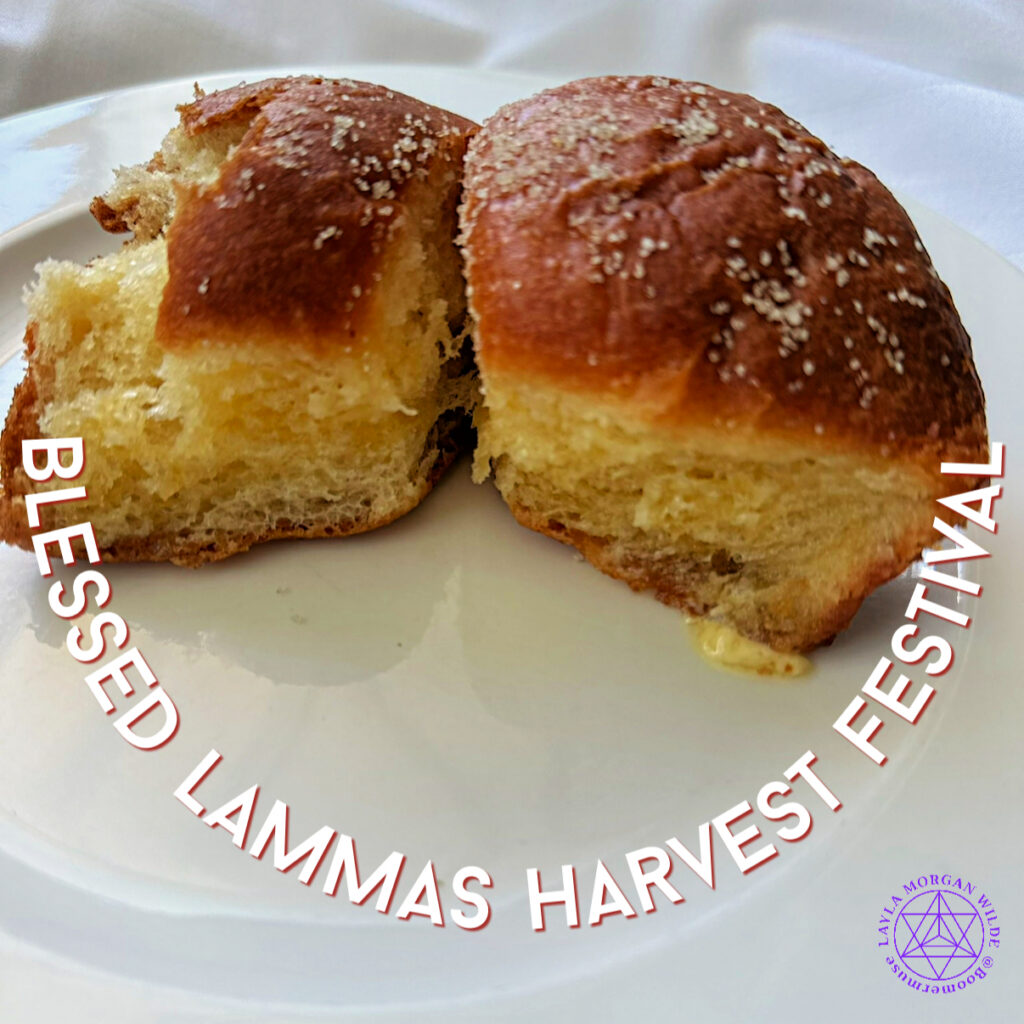
The Anglo-Saxons called it Lammas, from hlaf-mæsse or loaf-mass. The first bread of the season, blessed and sometimes broken into four pieces and set at the corners of the barn, a small working magic to protect what had just been brought in.
And then there’s the one I’ve always gravitated toward, given my Finnish roots: Freyfaxi, the Norse harvest festival honoring Freyr, god of fertility and the land’s abundance.
I want to be honest about this one, though, because I think honesty matters more than aesthetics: Freyfaxi isn’t an ancient, attested Norse holiday the way Lughnasadh is attested in Celtic sources. It’s a modern reconstruction: a name modern Heathen practitioners gave to fill a gap that was, historically, just… late summer.
Agrarian societies across the north had the same seasonal pressure: late summer grains “first cuts,” hay/grain transitions, and a need to secure the next stage of the harvest.
They absolutely marked this time of year, because everyone whose survival depended on grain marked this time of year. But they didn’t leave us a festival called Freyfaxi from the Viking Age.
What they left us is simpler and maybe truer: the plain fact that late summer, everywhere in the north, was when you started bringing things in before the dark came back.
I like that better anyway. Less mythology, more instinct. Which is, I suppose, exactly how I’ve always experienced this day myself.
An Ironic Little Thread
Here’s the twist I didn’t expect. For all my devotion to my Finnish and Estonian lineage — the ancestral altars, the language of light-bringers and green shoots, the pull toward the Nordic version of everything — my DNA results came back with a small, undeniable percentage of Irish blood.
Lugh, apparently, has a claim on me too.
I’ve spent so much energy making sense of myself through the lens of Karelian displacement and Baltic coastlines that I never made room for the possibility that some sliver of me might have been standing in a golden Irish field two thousand years ago, watching the same grain ripen, honoring the same threshold under a different god’s name. It feels fitting, actually, for a holiday that is itself a threshold, a day when the boundaries between what we think we are and what we actually carry get a little thinner.
Why My Body Always Knew
Cross-quarter days sit exactly between a solstice and an equinox,not the peak, not the pivot, but the midpoint between them. Lughnasadh falls almost precisely between the summer solstice and the autumn equinox. Astrologically and energetically, that’s not nothing. It’s a hinge point, and hinges are where you feel the turning before you can see it.
That’s the part I trust completely, regardless of which god’s name you put on it. Long before I could tell you what a sabbat was, I could tell you the air changed on the first of August.
I could feel the year begin to exhale summer.
Whatever you call this day — Lughnasadh, Lammas, Freyfaxi, or just “the day the green goes dark” it seems some of us are built to notice the threshold whether or not anyone ever taught us its name.
That’s the part of this practice that has never once let me down: the body knows the wheel is turning, long before the mind catches up.
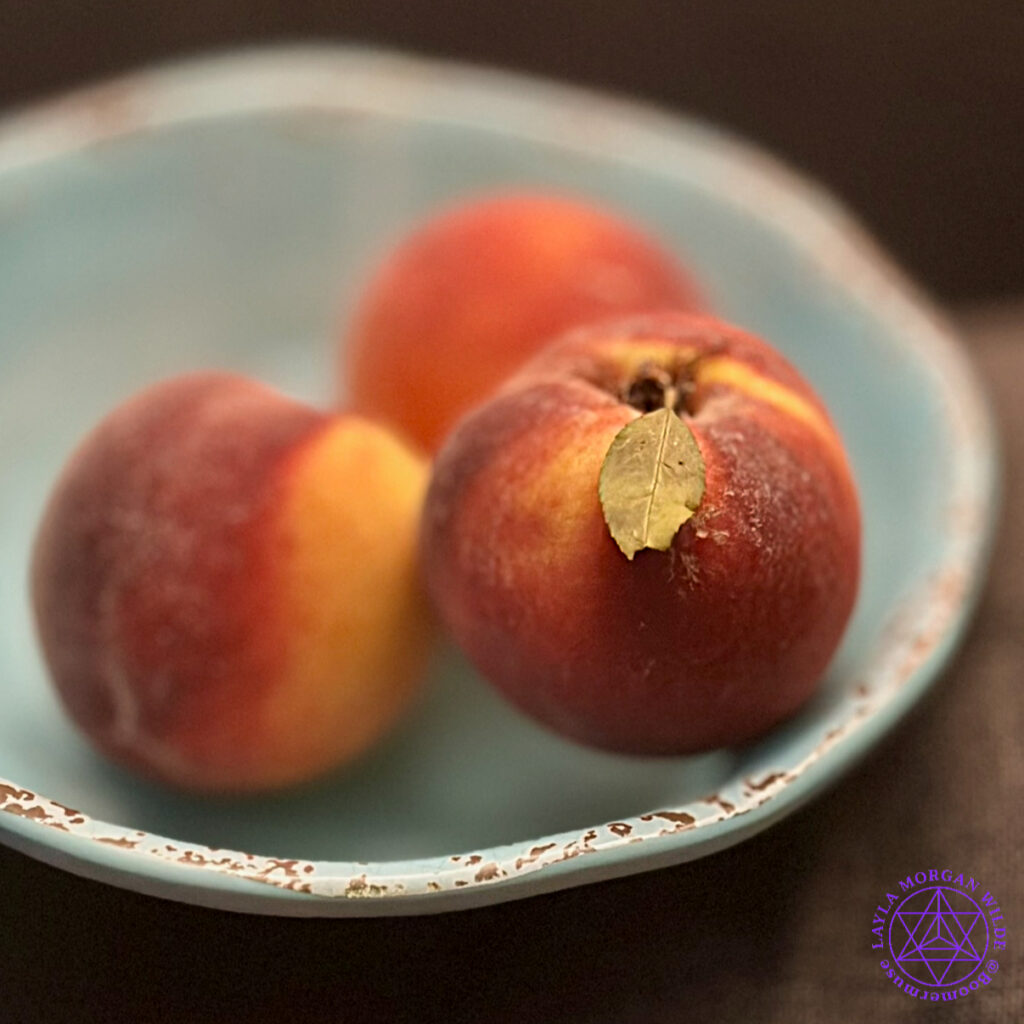
Enjoy the day, however you may celebrate it. I’ll be enjoying “First Fruits” with some juicy peaches.
xo,
Layla
